

Editorial resource · Jakarta
About Vasculindo and how we write
An English-language reading room for blood circulation and the daily habits that support vascular health — written in Jakarta for readers across Indonesia and Southeast Asia.
Vasculindo · editorial desk · Jakarta Selatan · Mon–Fri 9:00–18:00
[email protected] · +62 21 5299 7315
What we publish
Plain explanations of circulation, sitting time, hydration, sleep and tobacco avoidance

Desk habits · Jakarta · photographed at noon
Vasculindo is an English-language editorial resource about blood circulation and the daily habits that support vascular health. We're based in Jakarta and write for readers across Indonesia and Southeast Asia.
We publish plain-language explanations of circulation, movement, sitting time, hydration, sleep, and tobacco avoidance. The focus is on habits an ordinary adult can act on without medical supervision. That means you'll find articles you can read on a commute and put to use the same week — not programmes to enrol in.
We don't publish product reviews, supplement recommendations, or before-and-after stories. We don't run affiliate links. If a page can't be read without buying something, it doesn't belong here.
Most of our pages follow the same shape: what the habit is, why it matters for circulation, how much of it an ordinary week can hold, and where the advice gets uncertain. When a topic is contested between public health bodies, we say that on the page rather than picking the most dramatic version.
Related reading: Understanding Circulation · Daily Habits & Circulation
Who writes the content
A small editorial team, not a clinic
Vasculindo is maintained by a small editorial team. We're not a clinic and we don't employ physicians to write for the site. Our role is translation: taking public health guidance written for specialists and general audiences and putting it into plain English for a Southeast Asian readership.
That distinction matters when you're deciding how much weight to give a page. We can explain what public guidance says about walking, standing breaks, water intake, sleep regularity and tobacco avoidance. We can't assess your own situation, read your history, or tell you whether a symptom needs attention. Where a question needs a clinician, we say so instead of answering around it.
Where guidance varies between regions or is contested, we say so rather than picking the most dramatic version. If one national body recommends a different weekly activity range than another, both appear on the page with the source named.
Because our team is small, pages get reviewed in batches rather than continuously. When a page hasn't been checked against current guidance for a while, we'd rather update it than leave a stale claim standing.

Editorial review · Jakarta Selatan · weekday afternoon
Editorial standards
- No medical claims we can't support with public guidance.
- No fabricated testimonials, ratings, or reviews.
- No product recommendations, because we don't sell anything.
If a page doesn't meet those rules, it gets rewritten or removed.
Where our material comes from
Public guidance, named on the page
We don't cite research we can't verify, and we don't invent statistics to make a page more persuasive. Where a number appears, it comes from one of these public sources.
-
Singapore
Health Promotion Board
Used for everyday activity guidance written for the general public in a tropical, high-density city — the closest published comparison to daily life in Jakarta.
-
Singapore
National Heart Centre Singapore
Used for explanations of how circulation works and what heart health guidance looks like in Southeast Asian clinical settings.
-
United Kingdom
National Health Service
Used for plain-language descriptions of conditions and lifestyle factors, where the wording is already written for readers without a medical background.
-
United States
Society for Vascular Surgery
Used for vascular-specific material: what the vessels do, how sitting time and movement relate to them, and which questions belong with a specialist.
-
United States
American Heart Association
Used for physical activity guidance — the weekly movement and sitting-break ranges we quote when a page needs a concrete number.
We read these sources directly rather than summarising other summaries. Where two of them disagree, we name both and explain the difference in plain terms instead of blending them into one confident sentence.
What we deliberately don't do
No selling, no sponsorship, no outcome stories
We don't sell supplements, devices, or programs. We don't run sponsored content. We don't publish personal medical stories or outcome claims. We don't claim to diagnose or treat anything.
The reason is straightforward. Circulation advice that's wrapped in a sales pitch tends to be less useful, and readers deserve to know whether the person writing has something to sell. Here, nobody does.
It also changes what a page can say. We can describe what public guidance recommends without steering you toward a brand, a subscription, or a device. If a question needs a clinician's judgement, we point you there instead of filling the gap ourselves.
Chapter transition · corrections and updates next
Vasculindo · Jakarta Selatan
Corrections and updates
Tell us what reads wrong
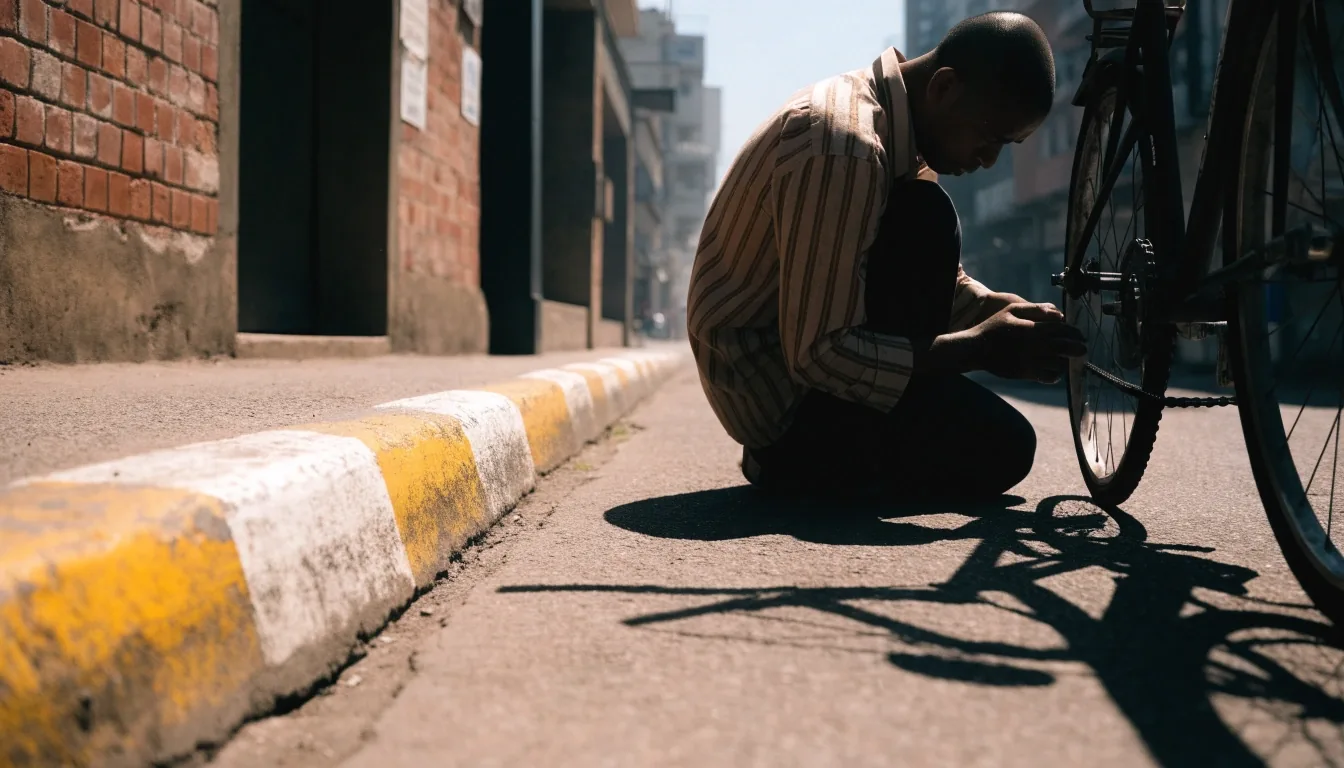
Kerb-side · Jakarta · photographed at noon
If you spot an error, a broken link, or a passage that reads as unclear, contact us and we'll look at it. We update pages when public guidance changes or when readers point out something we've missed.
Corrections are noted when they change the substance of a page. Minor wording edits aren't logged. A changed activity recommendation or a corrected explanation of how circulation works gets a note; a comma doesn't.
The most useful reports we get are specific: which page, which sentence, and what the current public guidance says instead. If you can name the source you're comparing against, we can check it properly and respond with what we found.
We can't answer medical questions or give individual health advice. For anything related to a specific health condition, please speak with a qualified healthcare professional. Messages about a page — a wrong figure, a dead link, a sentence that misleads — go to the editorial desk and we read every one.
Our audience
Written for an ordinary week
We write for adults in Indonesia and Southeast Asia who want to understand circulation without a medical degree. Many of our readers work desk jobs, commute in heavy traffic, and are looking for routines that fit an ordinary week — not a training plan.
We write in English because that's the language our readers have asked for. We don't translate the site into Indonesian, though we may add that in future. If you're reading this from Singapore, Malaysia, the Philippines or anywhere else in the region, the guidance is chosen to travel.


Editorial standards
Three rules, applied to every page
Rule one
No medical claims we can't support
Every health statement on the site traces back to public guidance from a named organisation. If a sentence can't be sourced that way, it doesn't go up. That's why our pages read as explanation rather than instruction — we describe what published guidance recommends, and we say when the evidence is thin or the recommendation is still debated.
Rule two
No fabricated social proof
No testimonials, no star ratings, no reader counts, no review quotes. If you don't see social proof on a page, that's deliberate — we'd rather show you the source list than a wall of praise.
Rule three
No product recommendations
We don't sell anything, so there's nothing to recommend. Pages stay free of brand names, affiliate links and sponsored placements.
If a page doesn't meet those rules, it gets rewritten or removed. That's the whole enforcement mechanism, and it's the one we apply when we review older pages against current guidance.
Questions we get
About the editorial desk
Writers Are your articles written by doctors?
Sources Where do the numbers on your pages come from?
Updates How often are pages updated?
Contact Can I ask a personal health question?
Where to go next
Start with the basics, or write to the desk
If you're new here, the circulation basics explain what the vessels do and how movement, sitting time, hydration, sleep and tobacco use relate to them. From there, the habit pages take one topic each and stay practical: what to do, how much, and where the advice stops.
If you'd rather ask us something directly — a correction, a source you think we've missed, or a topic you'd like covered — the editorial desk is open Monday to Friday, 9:00 AM to 6:00 PM Jakarta time. We're at Jl. Jend. Sudirman No. 52, Senayan, Kebayoran Baru, Jakarta Selatan 12190.
Editorial desk
- Address
- Jl. Jend. Sudirman No. 52, Senayan, Kebayoran Baru, Jakarta Selatan, DKI Jakarta 12190, Indonesia
- [email protected]
- Phone
- +62 21 5299 7315
- Hours
- Monday to Friday, 9:00 AM – 6:00 PM

Jakarta Selatan · weekdays 9:00–18:00